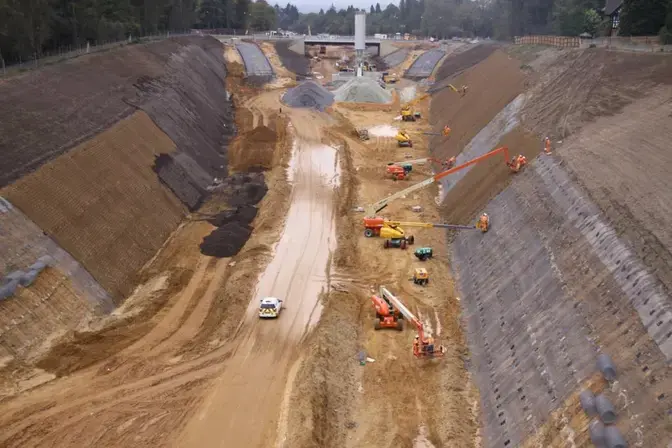
Soil nailing uses grouted steel nails to reinforce in situ soils and create a gravity retaining wall for permanent or temporary excavation support.
Process
Soil nail walls are generally constructed from the top down. Typically, soil is excavated in one to two metre deep stages. After each excavation stage, near-horizontal holes are drilled into the exposed face at typically one to two metre centres. Tension-resisting steel bars are inserted into the holes and grouted in place. A drainage system is installed on the exposed face, followed by the application of reinforced shotcrete wall facing. Precast face panels can also be used. Bearing plates are then fixed to the heads of the soil nails. This installation process is repeated until the design wall depth is reached. The finished soil nails then produce a zone of reinforced slope.
Specialist Contact | Anthony Lucas - [email protected] - +44 (0)7908 502122
Common uses
- Stabilise slopes and landslides
- Support excavations
- Repair existing retaining walls
Advantages
- Equipment is small enough to use in areas with restricted access
- Often a more cost effective and faster solution for temporary excavation support
- Can be installed from crane-suspended working platforms for existing steep slopes or existing retaining walls
- Allows excavation to start at the same time as the shoring system is being installed
Quality assurance
Keller has been installing and developing soil nailing techniques for many years. We use specialised equipment and experienced crews and employ strict quality control measures to ensure uniform and consistent results.
Related techniques
Related solutions
Related resources

Related projects
Commercial
Leeds Logic Industrial Park, Plot B
The development is a new unit at Logic Park Industrial Park, Leeds and required regrading of part of the sloping site and steepening of the slope to the North of the unit.
Infrastructure
A3 Dual Carriageway Link
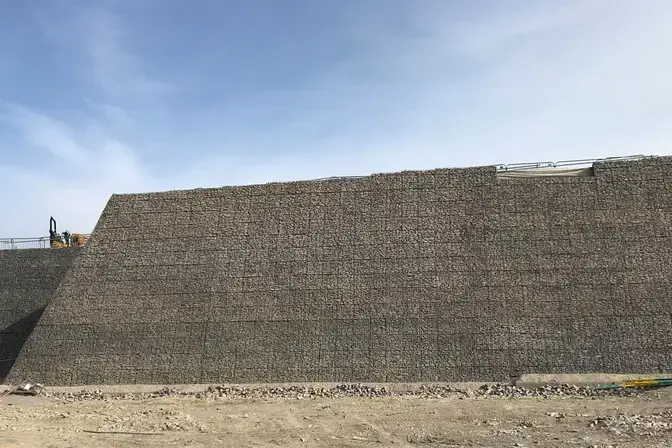
Keller designed and installed a cost-effective and robust soil nailing solution in an area that included a Site of Special Scientific Interest.