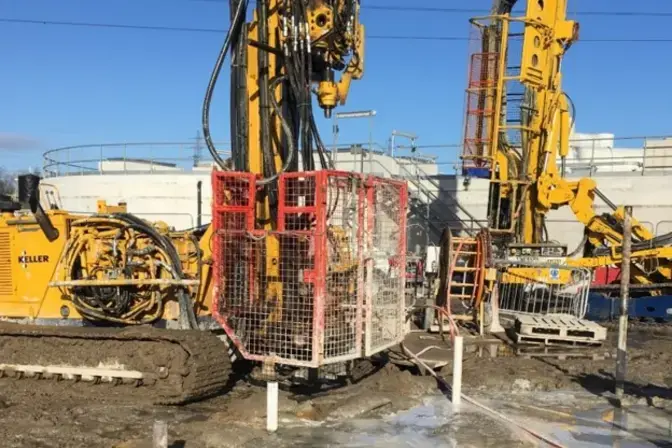
Rock grouting is normally done in fissured rock to reduce the flow of water along the joints and discontinuities in the rock.
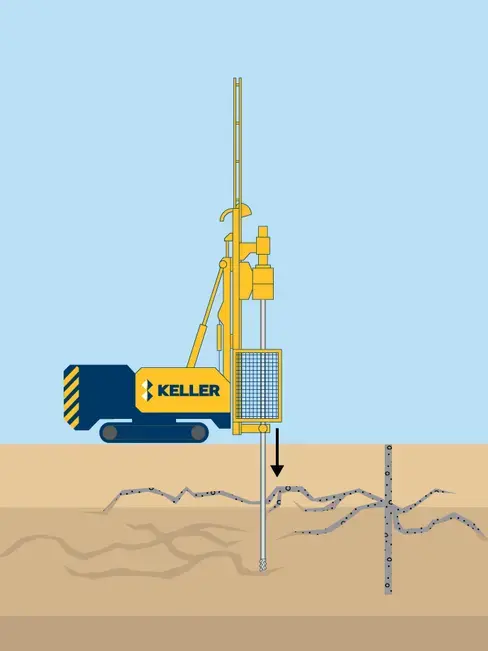
Process
Grout is typically injected in isolated stages from boreholes drilled using rotary percussive drills. Reduction in permeability is a function of the grouting material, the rock and grout design. Rock grouting is typically performed with general purpose, ultra-fine or micro-fine cement.
Specialist Contact | Bruce Stephenson - [email protected] - +44 (0)7918 193001
Common uses
- Reduce conductivity/transmissivity via interconnected porous zones in an aquifier
- Increase resistance against deformation
Advantages
- Can be effective in reducing groundwater flows
- Reduce pumping costs during basement excavation
- Reduced lowering of groundwater levels outside an excavation
- Can reduce rock deformation
Quality assurance
Keller has industry leading knowledge of grout materials and mixes and uses the latest drilling techniques to minimise borehole deviation and maximise efficiency. It can also apply sophisticated computerised control and reporting of the grout injection process.

Related projects
Infrastructure
London Power Tunnels 2
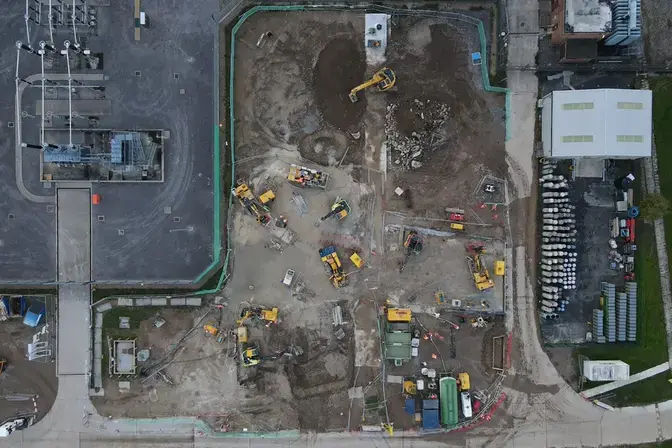
LPT2 is the second phase of an ambitious project to ‘rewire London’ to future proof the capital’s electricity supplies. The project involves building 30km of cable tunnels stretching from Wimbledon in south west London to Crayford in south east London. The tunnels, which will be up to four metres in diameter, will largely be buried deep beneath the streets.
Industrial
Woodsmith Mine Shaft
Sirius Minerals are developing the world’s largest mine for polyhalite, a naturally occurring fertilizer used in agriculture. As the site is in the North York Moors National Park, all the mineworking must be concealed underground.
Infrastructure
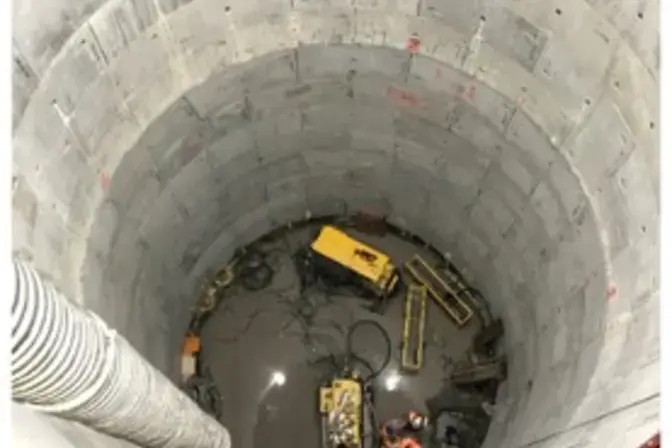
Beckton STW Shaft Construction
Extensive work is being carried out to upgrade London's ageing sewage network.