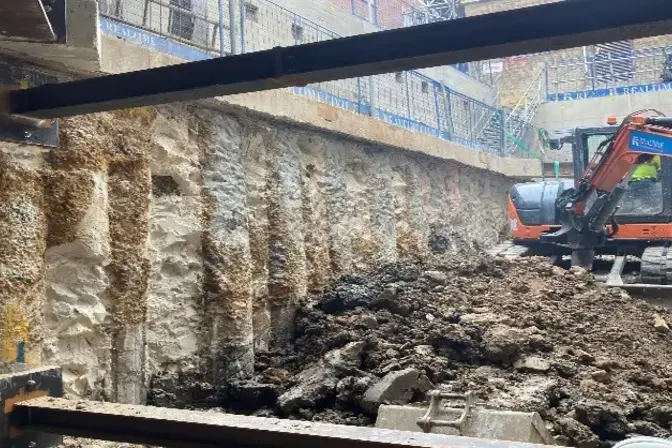
Pali Radice (literal translation ‘Root Pile’ from the Italian) is a versatile foundation system using small diameter cast in situ bored piles, developed in Italy in the 1950s. It has been extensively employed as an underpinning/stabilisation system for strengthening existing foundations which are settling or are required to support increased loads.
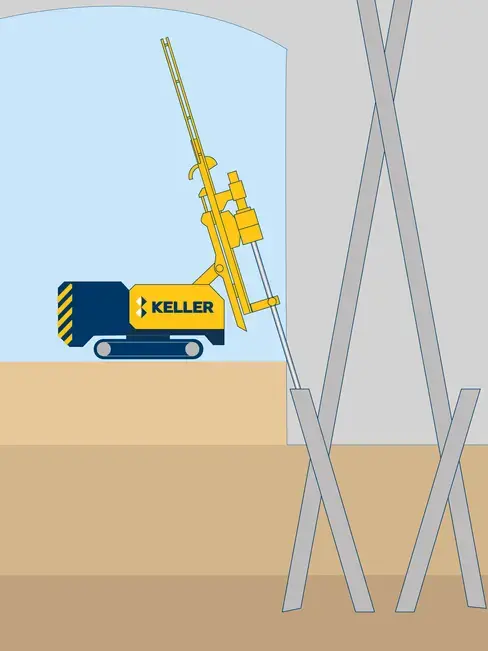
Process
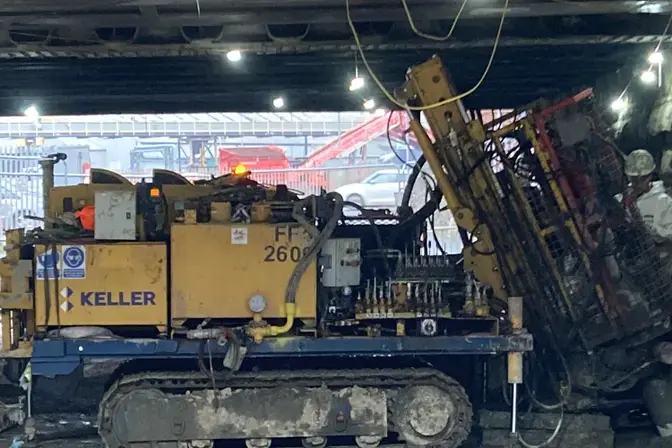
The piles are formed using specialist rotary drilling rigs (so that virtually no vibration is transmitted to the structure) by boring a temporary steel casing to depth using a special cutting bit.
A drilling fluid (usually water) is circulated through the casing so that it cools the cutting bit and returns outside the casing, transporting the arisings with it to the settlement tanks.
To enable the drilling rigs to operate in restricted headroom, short lengths of casing are coupled together during boring.
These specialist rigs are also narrow enough to fit into tight spaces and many are electric-powered, enabling them to operate safely where conditions are limited in other ways.
Specialist Contact | Anthony Lucas - [email protected] - +44 (0)7908 502122
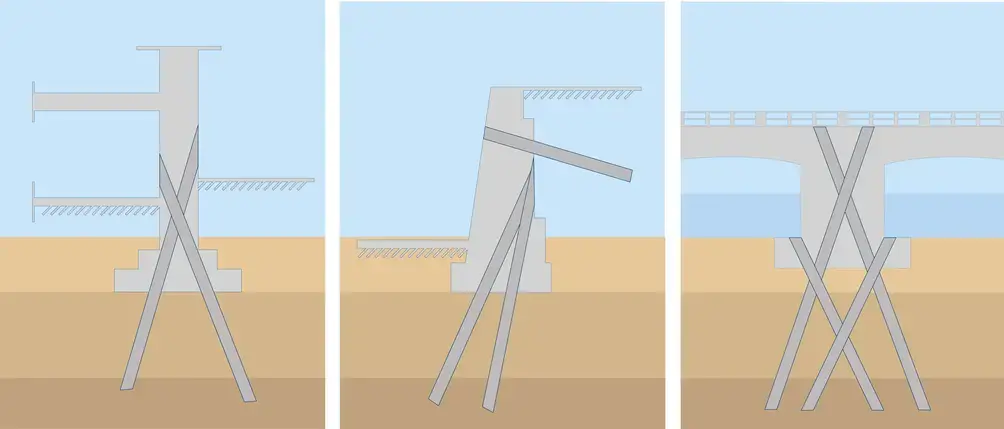
Common uses
- Underpinning to existing structures
- Stabilisation of bridge structures and retaining walls
- Stabilisation of listed/old structures
- Stabilisation of embankments and cuttings
- Upgrading of existing structural foundations
- Supplementary support for upward or outward extension of existing structures
- Boring through obstruction-laden ground to form new load bearing foundations and minipiled retaining walls
- Strip footing underpinning
- Column base underpinning for adding additional storeys to buildings
Advantages
- The versatility of the drilling rigs enables piles to be constructed through a succession of strata or artificial obstructions in a single operation
- The grout mix can penetrate into the sub-soil, thereby automatically filling any cavities and forming an intimate bond between the pile and the ground
- Pali Radice can be formed at any angle, even alongside existing buildings or industrial plant
- The special cutting bits enable piles to be constructed through virtually any buried obstruction
- Noise levels are far less than those normally associated with other forms of piling
- The process is virtually vibration-free because the piles are formed by rotary drilling
- Drilling rigs can access working areas via normal doorways and piles can be installed vertically 300 mm from an existing wall measured to the centre line of the pile

Related projects
Institutional/public
Catholic Apostle Church
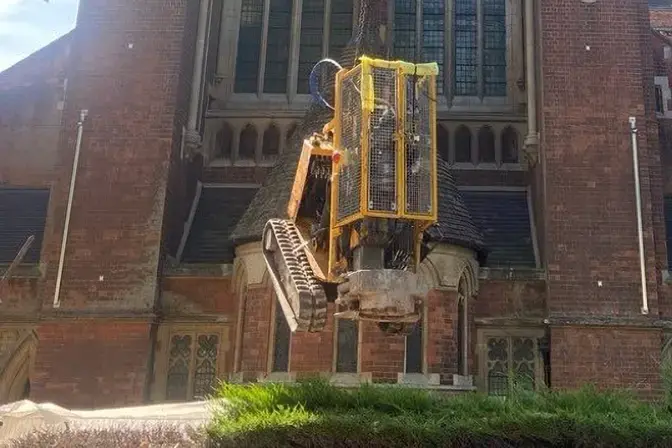
Expert intervention from Keller has successfully underpinned and stabilised the foundations of a Grade I listed church.
Residential
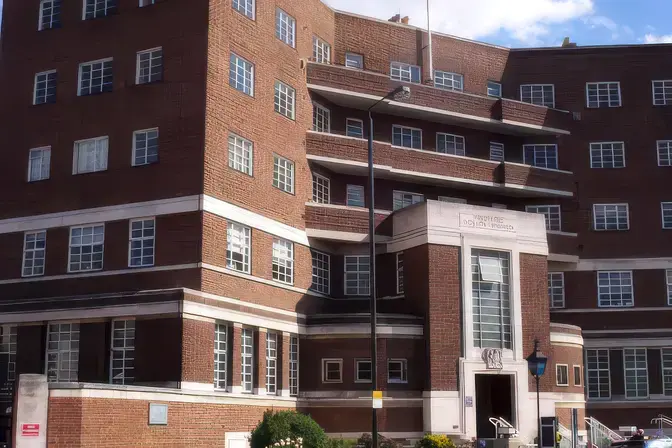
Tooting Police Station
Keller has carried out specialist geotechnical work for the 'sensitive redevelopment' of a former art deco police station into apartments.
Rail
Denmark Street bridge
The reconstruction of Denmark Road bridge was a vital part of Network Rail's upgrade of the UK's Victorian railway infrastructure in the north east of England.
Residential
2 Great George Street
As part of the £31m development of a Grade II former Victorian school, two floors were added to the four-story building which was being converted into 76 luxury apartments.

Commercial
Westbury Hotel
The £90m redevelopment of the iconic Westbury Mayfair Hotel in London was sparked by the COVID-19 pandemic.