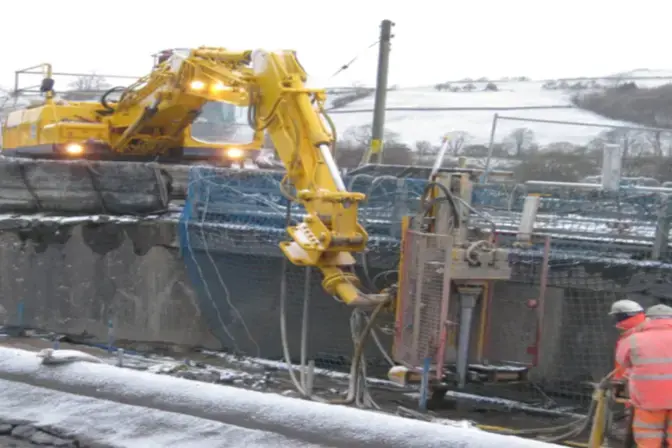
Slurry walls are constructed using a cement-bentonite slurry to produce a below ground low permeability barrier.
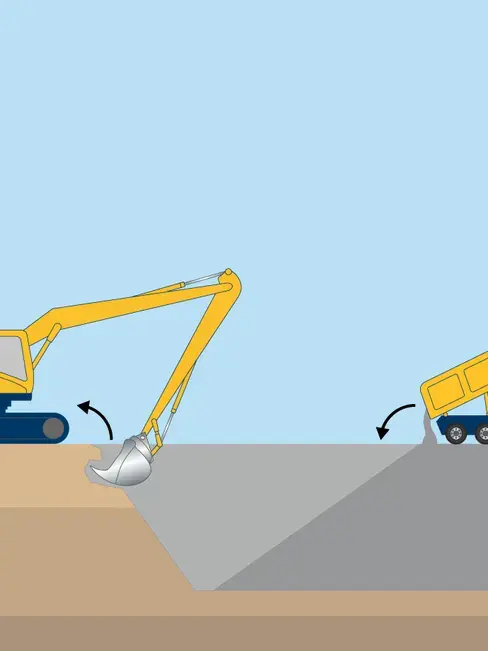
Process
A slurry cut-off wall or slurry trench wall is typically excavated using a backhoe (or grab) while simultaneously pumping a hydrated cement bentonite mix into the trench to depths in excess of 25m. Once cured, the slurry cut-off wall provides a permanent low permeability barrier to groundwater and leachates.
Where gas migration is the issue a high-density polyethylene membrane is placed in the wall in panels connected with an interlock system.
Specialist Contact | Bruce Stephenson - [email protected] - +44 (0)7918 193001
Common uses
- Create barriers to groundwater flow
- Encapsulate contaminated groundwater and leachates
- Prevent the lateral migration of gas when combined with an HDPE liner
- Typically installed for dam core cutoff, flood water control and landfill sites
Advantages
- Quick installation
- Low cost solution for low permeability barriers
- Permeability 1x10⁻⁹m/sec
- Resistant to range of heavy metals and organic contaminants including volatile organic compounds (VOCs), hydrocarbons, diesel, solvents and tars
Quality assurance
Keller has decades of experience installing slurry walls across the globe.
A specially developed mix combined with strict quality control ensures consistency and a product installed and designed to withstand the test of time.
Samples from the top and bottom of the trench are taken daily and a series of testing can be done including slump, specific gravity, bleed, shear strength and pH.
Related projects
Infrastructure
Earlswood Lakes
Earlswood Lakes are situated near Solihull, Birmingham. The underlying ground strata that surrounds the lakes is starting to degrade causing localised flooding in certain areas around the reservoir.
Infrastructure
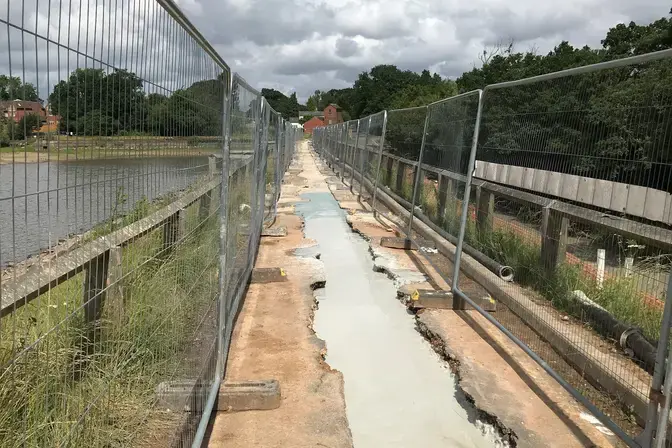
Project Munio
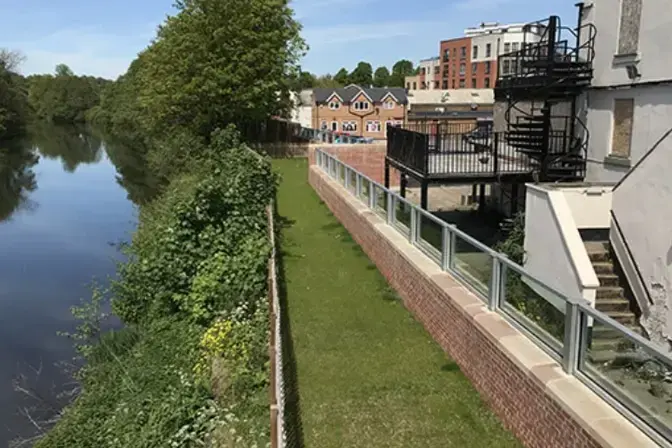
The Environment Agency is carrying out a number of upgrades along the River Derwent to accommodate future regeneration of the area.
Infrastructure
Chapel House Reservoir
The 100-year-old Chapel House Reservoir required a safety upgrade without disturbing either water supply or the habitat of the fish.